Every day, educators are encountering artificial intelligence in the tools they use and the work their students produce; sometimes intentionally, and sometimes without realizing it. From automated feedback to adaptive learning platforms, AI is already shaping how learning happens. Yet, like design, AI is not neutral. The way it is built, trained, and used can support learning, introduce bias, raise privacy concerns, or widen existing inequities.
Module 5: The AI Toolkit invites educators to build a clear, grounded understanding of what AI is (and what it is not) within an educational context. This module explores how AI systems work, where they appear in classrooms, and the ethical considerations that come with their use. You will examine issues such as data privacy, bias, equity, and environmental impact, while also exploring how AI can support assessment, feedback, and personalized learning when used responsibly. Through practical examples, reflection opportunities, and ethical frameworks, this module equips educators to make informed decisions about AI and to guide students thoughtfully in an AI-influenced learning environment.
向下滚动,继续您的 PDday 之旅!
目录
第一部分
AI Foundations
Artificial intelligence is increasingly present in the tools educators and students use every day, yet its meaning and impact are often misunderstood. In this submodule, you will explore what artificial intelligence is, how it functions, and how it appears in educational settings. You will learn the difference between analytical and generative AI, examine the core techniques that power AI systems, and trace key moments in the development of AI over time. This submodule also addresses common misconceptions about AI and highlights the limits, risks, and responsibilities that come with its use in classrooms.
注意:点击视频即可播放,或点击视频左下角的“在YouTube上观看”按钮直接在YouTube上观看。.
测试你的知识!
回望
When considering how AI might fit into your teaching practice, it can be helpful to move beyond what the technology can do and reflect on how it could support student understanding. Generative and analytical AI tools can influence how lessons are explained, how feedback is provided, and how learning gaps are identified. Thinking about a recent lesson where students struggled with comprehension or engagement may help you identify opportunities where AI could offer additional explanations, practice, or insight. By reflecting on where AI could clarify complex ideas, support pacing, or respond to individual needs, you can begin to see how small, intentional uses of AI might improve lesson comprehension while keeping your professional judgment and instructional goals at the centre of learning.
第二部分
AI Impacts & Classroom Relevance
As artificial intelligence becomes more embedded in the tools students and teachers use each day, understanding its influence on learning is no longer optional. In this submodule, you will examine why AI awareness is essential in educational settings and how AI can both support and challenge classroom practice. You will explore the positive and negative effects of AI, learn how concepts like the Turing Test explain why AI responses can sound convincing without being accurate, and consider the ethical, social, and privacy implications of AI use in schools. This submodule also highlights the importance of clear communication with parents, alignment with school board policies, and thoughtful reflection before introducing AI tools.
注意:点击视频即可播放,或点击视频左下角的“在YouTube上观看”按钮直接在YouTube上观看。.
测试你的知识!
回望
Teaching responsible AI use begins with helping students understand that AI is a tool that supports learning, not a substitute for thinking or effort. Reflecting on your current classroom practices can help you identify where expectations around appropriate use, transparency, and verification could be made clearer. Consider how you already model responsible technology use through citation, source checking, and discussion of accuracy and bias. By intentionally embedding conversations about when AI is helpful, when it should be questioned, and how to acknowledge its use, you can support students in developing ethical habits that carry across subjects and digital environments.
第三部分
AI in Action
As artificial intelligence moves from theory into everyday classroom practice, teachers need a clear understanding of how these tools are actually being used in schools. In this submodule, you will explore practical examples of AI in classrooms, from assessment and feedback to adaptive learning systems and assistive technologies. You will examine how AI supports personalization, engagement, and efficiency, while also considering the limits, risks, and design choices that shape student experiences. This submodule also highlights the skills students can develop through responsible AI use and reflects on how AI is influencing the teacher’s role.
注意:点击视频即可播放,或点击视频左下角的“在YouTube上观看”按钮直接在YouTube上观看。.
测试你的知识!
回望
AI tools can support critical thinking and creativity when they are used as prompts for exploration rather than sources of final answers. Reflecting on recent learning activities may help you identify opportunities where AI could encourage students to compare ideas, evaluate multiple perspectives, or revise their thinking. For example, AI-generated examples, drafts, or suggestions can become material for analysis, critique, or improvement. When students are asked to question, adapt, or build upon AI outputs, they practice deeper thinking and creative decision-making while maintaining ownership of their work.
第四部分
AI & Ethics
As artificial intelligence becomes more embedded in educational tools and systems, it raises important ethical questions that go beyond how the technology works. This submodule focuses on the ethical responsibilities that come with using AI in classrooms, including privacy, bias, equity, transparency, and accountability. You will examine how AI tools collect and use data, how misuse and harm can occur, and why informed consent and security matter in educational contexts. Through ethical frameworks, real-world risks, and practical evaluation tools, this submodule supports teachers in making thoughtful, professional decisions about AI use. The goal is not to discourage innovation, but to ensure that AI is used in ways that protect students, support learning, and uphold trust in educational environments.
注意:点击视频即可播放,或点击视频左下角的“在YouTube上观看”按钮直接在YouTube上观看。.
测试你的知识!
回望
Using AI ethically requires ongoing reflection on how tools align with your professional responsibilities. Taking time to consider recent or potential AI use can help you evaluate whether your judgment remains central to instructional decisions, whether student data and well-being are adequately protected, and whether students and families are clearly informed about AI use. Reflecting on these three responsibilities can reveal areas where additional clarification, safeguards, or communication may be needed. This process supports thoughtful, transparent AI use that prioritizes trust, safety, and educational purpose over convenience or novelty.
完成本模块 和 获得您的学分, 请完成以下测验并 成绩至少达到70% 通过。.
PDday.ca Module 5 Quiz
教学计划
PDday.ca 课堂教学方案
探索我们专为K-12课堂设计的完整数字媒体素养与网络安全课程计划,可轻松融入现有课程表与教学大纲。每节课内容生动有趣、易于实施,并精心设计为45分钟内完成,让课堂整合变得简单无压力。.
PDday.ca 教学资料
这里有三个幻灯片,按照年级范围(9-12 年级、5-8 年级和 1-4 年级)进行筛选,您可以直接添加到谷歌教室中。通过这些幻灯片,您可以轻松地将信息转化为 寓教于乐 这些幻灯片可随时使用,让学生自己成为专家。您可以在课堂上演示这些幻灯片,也可以与学生和家长分享,让他们自己探索。
PDday.ca 课堂活动
以下是可直接在课堂上使用并上传至Google Classroom的教学活动。包含教师版和学生版两种格式,可直接分发使用。此版本可作为 教师指南 或可与学生共享以便使用。这些活动与课程大纲相匹配,旨在加深学生对网络安全概念的理解。它们按年级范围(幼儿园至四年级和五年级至十二年级)分类,并整合于单一文档中以便查阅。.
教师课程调整
我们通过综合指南简化了将网络安全材料纳入课程的过程。该指南可帮助教育工作者将我们的资源与各省的标准相统一,从而轻松地将我们的内容纳入课程计划,同时达到教育效果。通过按省份、年级和课程进行筛选,教育工作者可以准确找到 资源 或 教学计划 需要包含网络安全教育。.
提示单与指南手册
About AI Tip Sheets
AI Timeline
AI Terms
Positive & Negative Effects of AI
Using AI Tip sheets
Practical Guide to Generative AI
如何安全使用生成式人工智能
ChatGPT For Educators
AI Tool Evaluation Checklist
AI-generated Intimate Images tip sheets
A notice to teachers and principles
How to best support a victim
Info for teens
AI Ethics Tip sheets
Privacy/Security Practices & Measures
其他课程

网络字节通过数字扫盲增强教育工作者的能力
CyberBytes 计划是专为加拿大 K-12 教育工作者设计的免费、自定进度的课程,旨在适应您的日程安排,促进您的个人和职业发展。该课程由经过认证的网络安全专家开发,使您能够创建富有吸引力、精通技术的课堂,同时让您和您的学生掌握在不断发展的数字环境中茁壮成长所需的技能。
如果您希望……
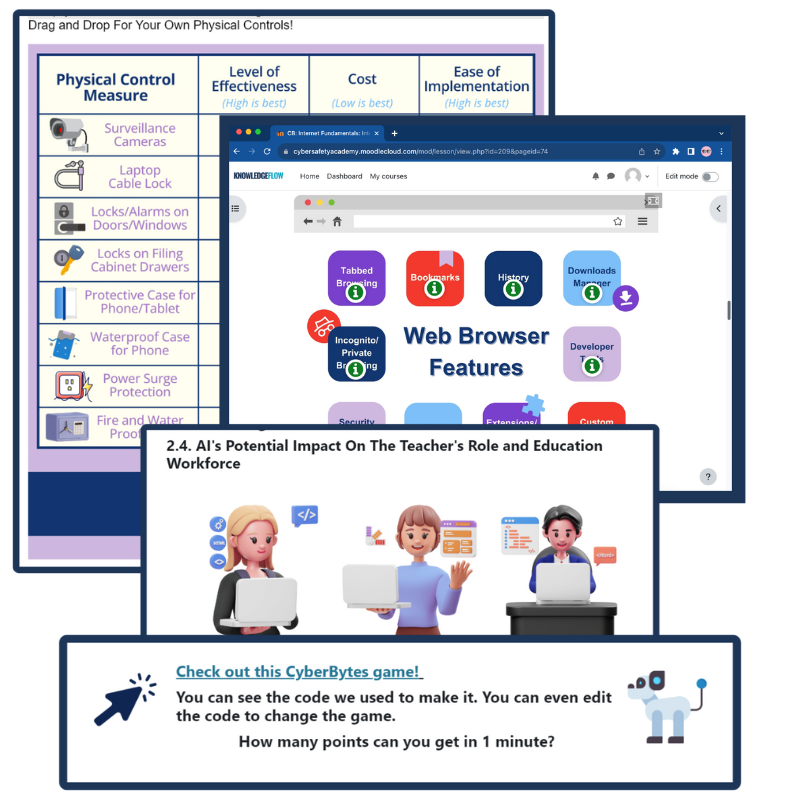
- Further expand your knowledge on AI in education, AI-driven assessment and feedback tools, AI-powered adaptive learning systems, possible impacts of AI on the teacher’s role and education workforce;
- 获取跨课程即用教案、课堂海报和清单、学生资源、提示单和其他外部资源;;
请前往 ICTC的在线网络字节课程 并完成 Cyber Design & Evolution Gigabyte module by clicking the button to the left.
教师工具包

#UnHackable 的教室、教师、校长和行政人员会带来 #UnHackable 的学校。每周一次、为期 12 周的电子邮件课程将直接发送到您的电子邮箱,内容包括您和您的课堂需要了解的网络安全基础知识。这些工具包包含易于消化的内容,您可以将其无缝添加到课堂活动和个人生活中。每个版本都包含随时可用的课程计划!
"(《世界人权宣言》) 信息和通信技术理事会(ICTC) 是一个中立的非营利性国家专业技术中心,其使命是加强加拿大在全球经济中的数字优势。30 多年来,该中心拥有一支 100 多人的专家团队,为个人和企业提供前瞻性研究、实用的政策建议和能力建设解决方案。ICTC 的目标是确保利用技术推动经济增长和创新,并确保加拿大的劳动力在全球范围内保持竞争力。ICTC 的 "项目发展日 "由加拿大政府的 "加拿大代码计划"(CanCode Initiative)资助。