


En asociación de confianza con la Fundación KnowledgeFlow para la Ciberseguridad

Cada día, los educadores se encuentran con la inteligencia artificial en las herramientas que utilizan y en el trabajo que realizan sus alumnos; a veces intencionadamente y otras sin darse cuenta. Desde la retroalimentación automatizada hasta las plataformas de aprendizaje adaptativo, la IA ya está dando forma a cómo se produce el aprendizaje. Sin embargo, al igual que el diseño, la IA no es neutral. La forma en que se construye, entrena y utiliza puede favorecer el aprendizaje, introducir prejuicios, plantear problemas de privacidad o ampliar las desigualdades existentes.
Módulo 5: El juego de herramientas de la IA invita a los educadores a construir una comprensión clara y fundamentada de lo que es (y lo que no es) la IA dentro de un contexto educativo. Este módulo explora cómo funcionan los sistemas de IA, dónde aparecen en las aulas y las consideraciones éticas que conlleva su uso. Se examinarán cuestiones como la privacidad de los datos, la parcialidad, la equidad y el impacto medioambiental, al tiempo que se explora cómo la IA puede apoyar la evaluación, la retroalimentación y el aprendizaje personalizado cuando se utiliza de forma responsable. A través de ejemplos prácticos, oportunidades de reflexión y marcos éticos, este módulo equipa a los educadores para tomar decisiones informadas sobre la IA y para guiar a los estudiantes cuidadosamente en un entorno de aprendizaje influenciado por la IA.
Desplácese hacia abajo para continuar su viaje PDday.
Contenido
Parte 1
Fundamentos de la IA
La inteligencia artificial está cada vez más presente en las herramientas que los educadores y los estudiantes utilizan a diario, pero su significado y su impacto a menudo no se comprenden bien. En este submódulo explorarás qué es la inteligencia artificial, cómo funciona y cómo aparece en los entornos educativos. Aprenderá la diferencia entre la IA analítica y la generativa, examinará las técnicas básicas que impulsan los sistemas de IA y trazará los momentos clave en el desarrollo de la IA a lo largo del tiempo. Este submódulo también aborda los conceptos erróneos más comunes sobre la IA y destaca los límites, riesgos y responsabilidades que conlleva su uso en las aulas.
Nota: Haga clic en el vídeo para reproducirlo o haga clic en el botón “Ver en YouTube” situado en la parte inferior izquierda del vídeo para verlo directamente en YouTube.
¡Pon a prueba tus conocimientos!
Reflexionando sobre el pasado
A la hora de considerar cómo podría encajar la IA en su práctica docente, puede ser útil ir más allá de lo que la tecnología puede hacer y reflexionar sobre cómo podría ayudar a la comprensión de los alumnos. Las herramientas de IA generativas y analíticas pueden influir en la forma de explicar las lecciones, de proporcionar retroalimentación y de identificar las lagunas de aprendizaje. Pensar en una lección reciente en la que los alumnos hayan tenido problemas de comprensión o compromiso puede ayudarle a identificar oportunidades en las que la IA podría ofrecer explicaciones, prácticas o conocimientos adicionales. Al reflexionar sobre los aspectos en los que la IA podría aclarar ideas complejas, apoyar el ritmo o responder a necesidades individuales, puede empezar a ver cómo los usos pequeños e intencionados de la IA podrían mejorar la comprensión de las lecciones, manteniendo al mismo tiempo su criterio profesional y sus objetivos pedagógicos en el centro del aprendizaje.
Parte 2
Impacto de la IA y relevancia en el aula
A medida que la inteligencia artificial se va integrando en las herramientas que los estudiantes y los profesores utilizan cada día, comprender su influencia en el aprendizaje ya no es opcional. En este submódulo, examinarás por qué la concienciación sobre la IA es esencial en los entornos educativos y cómo la IA puede tanto apoyar como desafiar la práctica en el aula. Explorará los efectos positivos y negativos de la IA, aprenderá cómo conceptos como el Test de Turing explican por qué las respuestas de la IA pueden sonar convincentes sin ser exactas, y considerará las implicaciones éticas, sociales y de privacidad del uso de la IA en las escuelas. Este submódulo también subraya la importancia de una comunicación clara con los padres, la alineación con las políticas del consejo escolar y una reflexión meditada antes de introducir herramientas de IA.
Nota: Haga clic en el vídeo para reproducirlo o haga clic en el botón “Ver en YouTube” situado en la parte inferior izquierda del vídeo para verlo directamente en YouTube.
¡Pon a prueba tus conocimientos!
Reflexionando sobre el pasado
La enseñanza del uso responsable de la IA empieza por ayudar a los alumnos a entender que la IA es una herramienta que apoya el aprendizaje, no un sustituto del pensamiento o del esfuerzo. Reflexionar sobre sus prácticas actuales en el aula puede ayudarle a identificar dónde podrían ser más claras las expectativas en torno al uso apropiado, la transparencia y la verificación. Piense en cómo modela ya el uso responsable de la tecnología mediante citas, comprobación de fuentes y debate sobre la exactitud y la parcialidad. Al incorporar intencionadamente conversaciones sobre cuándo es útil la IA, cuándo debe cuestionarse y cómo reconocer su uso, puede ayudar a los alumnos a desarrollar hábitos éticos que se extiendan a todas las asignaturas y entornos digitales.
Parte 3
La IA en acción
A medida que la inteligencia artificial pasa de la teoría a la práctica cotidiana en las aulas, los profesores necesitan comprender claramente cómo se utilizan realmente estas herramientas en las escuelas. En este submódulo, explorará ejemplos prácticos de IA en las aulas, desde la evaluación y la retroalimentación hasta los sistemas de aprendizaje adaptativo y las tecnologías de asistencia. Examinarás cómo la IA favorece la personalización, el compromiso y la eficiencia, al tiempo que consideras los límites, los riesgos y las opciones de diseño que dan forma a las experiencias de los estudiantes. Este submódulo también destaca las habilidades que los estudiantes pueden desarrollar mediante el uso responsable de la IA y reflexiona sobre cómo la IA está influyendo en el papel del profesor.
Nota: Haga clic en el vídeo para reproducirlo o haga clic en el botón “Ver en YouTube” situado en la parte inferior izquierda del vídeo para verlo directamente en YouTube.
¡Pon a prueba tus conocimientos!
Reflexionando sobre el pasado
Las herramientas de IA pueden apoyar el pensamiento crítico y la creatividad cuando se utilizan como estímulos para la exploración y no como fuentes de respuestas definitivas. Reflexionar sobre actividades de aprendizaje recientes puede ayudarle a identificar oportunidades en las que la IA podría animar a los alumnos a comparar ideas, evaluar múltiples perspectivas o revisar su pensamiento. Por ejemplo, los ejemplos, borradores o sugerencias generados por la IA pueden convertirse en material de análisis, crítica o mejora. Cuando se pide a los alumnos que cuestionen, adapten o construyan a partir de los resultados de la IA, practican un pensamiento más profundo y una toma de decisiones creativa al tiempo que mantienen la propiedad de su trabajo.
Parte 4
IA y ética
A medida que la inteligencia artificial se integra en las herramientas y los sistemas educativos, se plantean importantes cuestiones éticas que van más allá del funcionamiento de la tecnología. Este submódulo se centra en las responsabilidades éticas que conlleva el uso de la IA en las aulas, incluyendo la privacidad, la parcialidad, la equidad, la transparencia y la rendición de cuentas. Examinarás cómo las herramientas de IA recopilan y utilizan los datos, cómo puede producirse un uso indebido y perjudicial, y por qué el consentimiento informado y la seguridad son importantes en contextos educativos. A través de marcos éticos, riesgos del mundo real y herramientas prácticas de evaluación, este submódulo ayuda a los profesores a tomar decisiones meditadas y profesionales sobre el uso de la IA. El objetivo no es desalentar la innovación, sino garantizar que la IA se utilice de forma que proteja a los estudiantes, apoye el aprendizaje y mantenga la confianza en los entornos educativos.
Nota: Haga clic en el vídeo para reproducirlo o haga clic en el botón “Ver en YouTube” situado en la parte inferior izquierda del vídeo para verlo directamente en YouTube.
¡Pon a prueba tus conocimientos!
Reflexionando sobre el pasado
El uso ético de la IA requiere una reflexión continua sobre cómo las herramientas se alinean con sus responsabilidades profesionales. Dedicar tiempo a considerar el uso reciente o potencial de la IA puede ayudarle a evaluar si su criterio sigue siendo fundamental en las decisiones de enseñanza, si los datos y el bienestar de los alumnos están adecuadamente protegidos y si los alumnos y las familias están claramente informados sobre el uso de la IA. Reflexionar sobre estas tres responsabilidades puede revelar áreas en las que pueden ser necesarias aclaraciones adicionales, salvaguardias o comunicación. Este proceso apoya un uso reflexivo y transparente de la IA que priorice la confianza, la seguridad y el propósito educativo sobre la conveniencia o la novedad.
Para completar este módulo y recibir su crédito, por favor, complete el siguiente cuestionario y obtener una calificación de al menos 70% pasar.
PDday.ca Módulo 5 Cuestionario
Planes de lecciones
PDday.ca Planes de lecciones para tu aula
Explore nuestra colección completa de planes de lecciones sobre alfabetización en medios digitales y ciberseguridad, diseñados específicamente para aulas de primaria y secundaria, que se adaptan fácilmente a su horario y plan de estudios actuales. Cada lección es atractiva, fácil de impartir y está diseñada intencionadamente para completarse en 45 minutos o menos, lo que facilita su integración en el aula sin estrés.
PDday.ca Materiales didácticos
Aquí tienes tres presentaciones de diapositivas, filtradas por rango de grado (Grados 9-12, 5-8, y 1-4), que puedes añadir directamente a Google Classroom. Estas presentaciones de diapositivas facilitan la conversión de la información en lecciones enseñables con diapositivas listas para que los alumnos se conviertan ellos mismos en expertos. Puedes presentarlas en clase o compartirlas con alumnos y padres para que las exploren por su cuenta.
PDday.ca Actividades de clase
Aquí encontrarás actividades didácticas que puedes utilizar directamente en el aula y subir a Google Classroom. Hay una versión para profesores y otra para alumnos que se pueden entregar directamente. Esta versión funciona como un guía del profesor o se pueden compartir con los alumnos para facilitar su uso. Las actividades están alineadas con el plan de estudios y diseñadas para profundizar la comprensión de los alumnos sobre los conceptos de ciberseguridad. Están organizadas por rango de grados (grados K-4 y grados 5-12) y convenientemente incluidas en un solo documento para facilitar el acceso.
Alineación curricular para profesores
Hemos simplificado la integración de nuestros materiales sobre ciberseguridad en su plan de estudios con una guía completa. Esta guía ayuda a los educadores a adaptar nuestros recursos a los estándares provinciales, lo que facilita la incorporación de nuestro contenido en los planes de estudio y el cumplimiento de los objetivos educativos. Al filtrar por provincia, grado y curso, los educadores pueden encontrar exactamente lo que necesitan. recurso o plan de lecciones necesario incluir la educación en ciberseguridad.
Hojas de consejos y guías
Acerca de las hojas de consejos sobre AI
Cronología de la IA
Términos de IA
Efectos positivos y negativos de la IA
Utilización de hojas de consejos AI
Guía práctica de la IA generativa
Cómo utilizar la IA Generativa con seguridad
ChatGPT para educadores
Lista de comprobación para la evaluación de herramientas de IA
Hojas de consejos sobre imágenes íntimas generadas por IA
Aviso a profesores y principios
Cómo apoyar mejor a una víctima
Información para adolescentes
Fichas de consejos sobre ética de la IA
Prácticas y medidas de privacidad y seguridad
Cursos adicionales
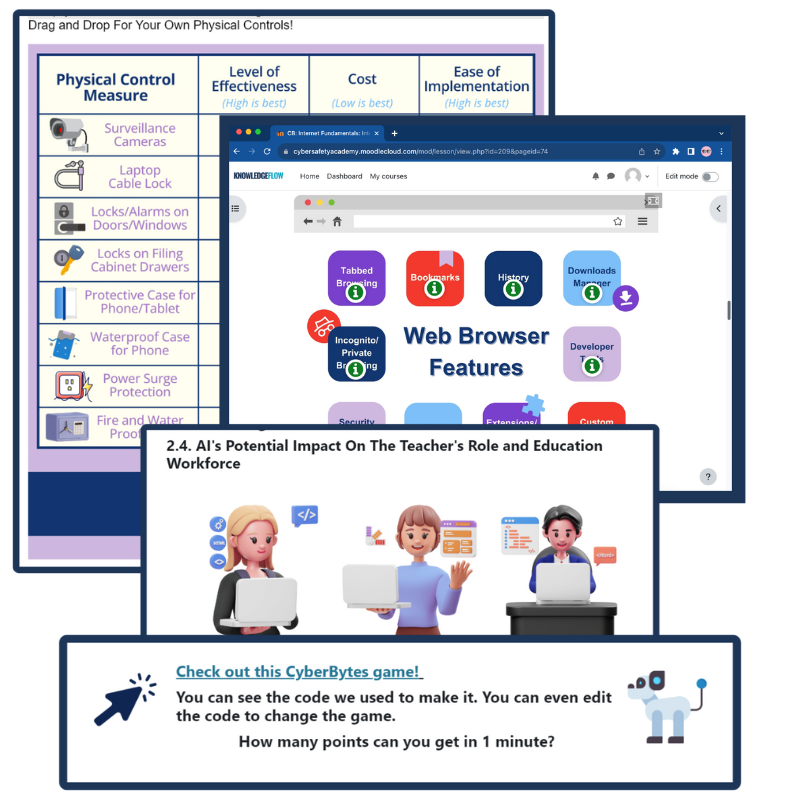
CyberBytes: Capacitar a los educadores mediante la alfabetización digital
El Programa CyberBytes es un curso gratuito y autodidáctico creado exclusivamente para educadores de K-12 en Canadá, diseñado para adaptarse a su horario y mejorar su crecimiento personal y profesional. Desarrollado por expertos certificados en ciberseguridad, este programa te capacita para crear aulas atractivas y conocedoras de la tecnología, a la vez que te dota a ti y a tus alumnos de las habilidades necesarias para prosperar en un panorama digital en constante evolución.
Si desea...
- Amplíe sus conocimientos sobre la IA en la educación, las herramientas de evaluación y retroalimentación basadas en la IA, los sistemas de aprendizaje adaptativo impulsados por la IA y las posibles repercusiones de la IA en el papel del profesor y en el personal docente;
- Obtenga planes de lecciones transversales listos para usar, carteles y listas de control para el aula, recursos para los estudiantes, hojas de consejos y otros recursos externos;
Por favor, vaya a Curso CyberBytes en línea del ICTC y completar el Ciberdiseño y evolución Gigabyte haciendo clic en el botón de la izquierda.
Herramientas para el profesor

#UnHackable aulas, profesores, directores y administración conducen a #UnHackable escuelas. Este curso semanal de 12 semanas se enviará directamente a su dirección de correo electrónico y cubrirá los fundamentos de la ciberseguridad que usted y su clase necesitan conocer. Estos kits de herramientas se crearon para incluir contenidos fáciles de digerir que puedas incorporar sin problemas a las actividades de tu clase y a tu vida personal. En cada edición se incluyen planes de clase listos para usar.

En Consejo de Tecnologías de la Información y la Comunicación (CTIC) es un centro nacional de conocimientos neutral y sin ánimo de lucro cuya misión es reforzar la ventaja digital de Canadá en la economía mundial. Desde hace más de 30 años, y con un equipo de más de 100 expertos, ofrece investigación con visión de futuro, asesoramiento político práctico y soluciones de capacitación para particulares y empresas. El objetivo del ICTC es garantizar que la tecnología se utilice para impulsar el crecimiento económico y la innovación, y que la mano de obra canadiense siga siendo competitiva a escala mundial. El PDday del ICTC está financiado por la Iniciativa CanCode del Gobierno de Canadá.
 English
  French
  Chinese
  Spanish
  Ukrainian